
One of the most common questions we get is:
“Is a heat/cool pump really beneficial on a plunge pool?”
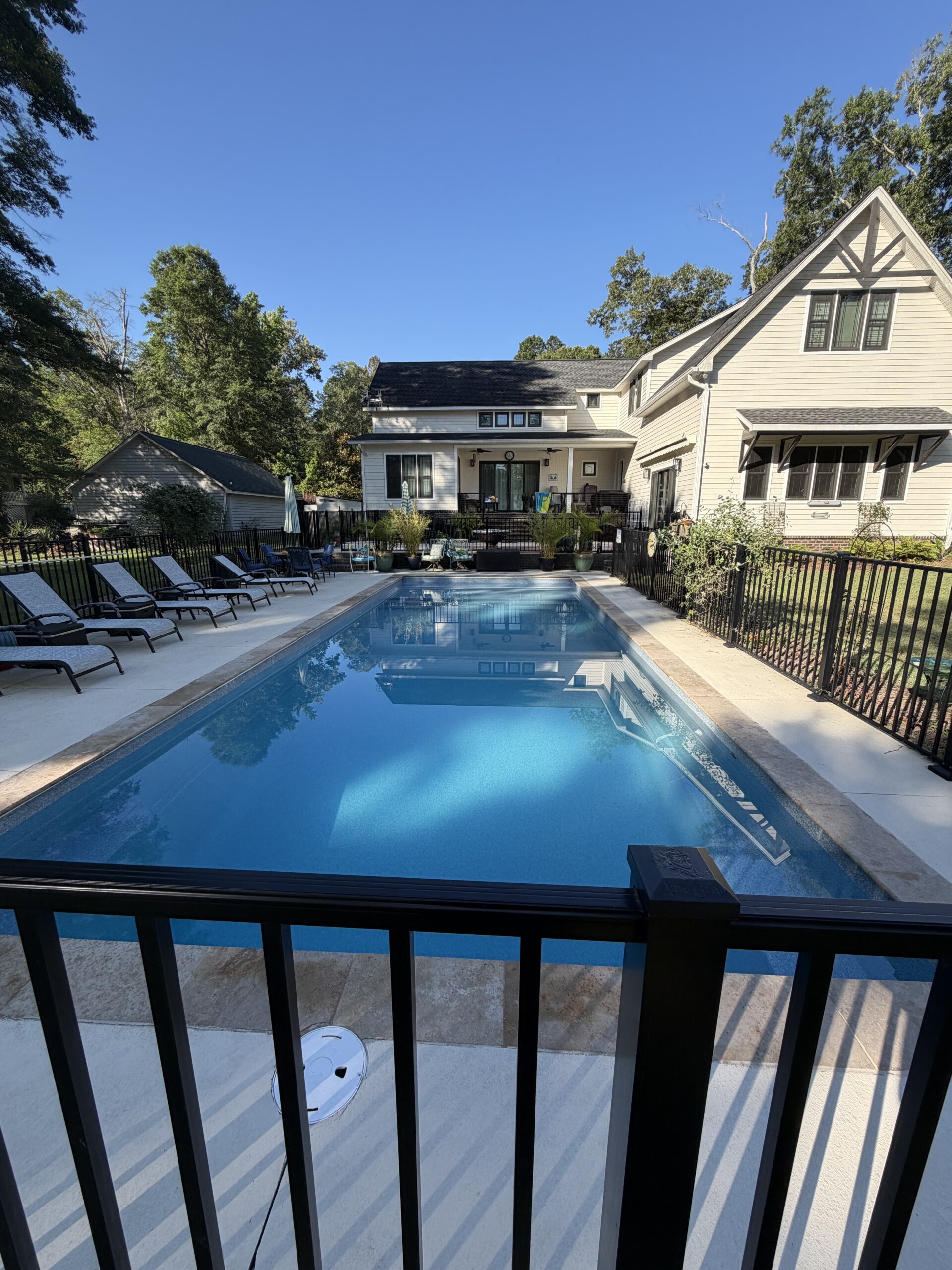
The answer honestly depends on how you plan to use your pool, but after owning a fiberglass plunge pool myself — and spending years in the pool business here in the South — I’d like to share my personal thoughts and experiences.
When Summer Heat Turns Your Pool into a Hot Tub
In the South, late summer months like August, September, and even October can easily push pool water temperatures into the 90–94-degree range.
At that point, your relaxing backyard oasis can start feeling more like bath water than a refreshing pool. Instead of cooling off outside, many homeowners find themselves retreating indoors to the air conditioning.
So how do you cool the water down?
There are a few temporary solutions:
- Buying bags of ice from the local Twice the Ice
- Lowering the water level and replacing it with fresh water
- Swimming early in the morning before the heat builds
- Adding shade sails or shade cloths
- Running bubblers, waterfalls, or deck jets to create evaporation cooling
While these methods may help a little, none of them consistently maintain a cooler water temperature for long periods of time.
Why I Personally Like a Heat/Cool Pump
For me, spring, summer, and fall are my favorite times to enjoy my plunge pool. That’s where a heat/cool pump has really become valuable.
In the spring, I can efficiently heat the pool and begin swimming months earlier than many friends who don’t have heaters.
But my favorite benefit comes during the hottest part of summer.
Many traditional propane or natural gas heaters only heat water — they cannot cool it. With a heat/cool pump, I can switch the system into “cool mode,” allowing it to gradually lower the pool temperature to a far more comfortable level.
Most modern heat/cool pumps are surprisingly efficient and can cool water temperatures dramatically — even down into cold plunge ranges around 42 degrees.
Personally, that’s colder than I prefer for everyday swimming, but for those interested in cold therapy or wellness benefits, that option may be appealing.
For regular summer use, I typically cool my pool from around 92 degrees down to a much more refreshing 84–86 degrees. That small temperature difference makes a huge impact on comfort and enjoyment.
Heating Benefits Many Homeowners Overlook
While I’ve talked mainly about the cooling benefits — because honestly that’s my personal favorite time of year to be in the pool — a heat/cool pump also offers tremendous heating benefits.
For homeowners here in the South, a heat/cool pump can easily extend the swimming season well into late November, and sometimes even December depending on weather conditions. It can also warm the water much earlier in the spring, allowing you to start enjoying your pool before many others even think about opening theirs.
That extended season is one of the biggest reasons many plunge pool owners choose to add a heater/chiller system.
One thing home-owners should understand is that heat/cool pumps operate using the ambient air temperature. Once outside temperatures begin dropping into the low 40s, most units become much less efficient and will eventually stop operating altogether.
Personally, that limitation has never bothered me. As I mentioned earlier, I’m not much of a winter swimmer anyway. For my lifestyle, the ability to comfortably enjoy the pool through spring, summer, and fall has been more than enough value.
What About Energy Costs?
Because I use my heat/cool pump only on an as-needed basis, I’ve found the additional electrical cost to be very reasonable.
On average, it adds approximately $60–$150 per month to my Dominion Energy bill, depending on the season and how often it’s running.
Of course, I’ve mainly shared my personal experience using a heat/cool pump on a plunge pool. However, homeowners with full-size swimming pools can absolutely enjoy the same benefits I’ve mentioned.
The main difference is that larger pools require larger heat/cool pumps with higher BTU capacities in order to efficiently heat and cool the additional gallons of water. Naturally, with larger equipment and more water volume, monthly energy costs would also increase accordingly.
Typical Cost & Electrical Requirements
As of summer 2026, the starting cost for a heat/cool pump is generally around $4,000 and up, plus installation costs.
Most units typically operate on 230-volt power and require a dedicated 50-amp breaker. Depending on your existing electrical setup and the distance from your equipment pad to the electrical panel, installation costs can vary.
As with any pool equipment purchase, proper sizing is very important. Heat/cool pumps are sized according to both the pool’s total gallons of water and the plumbing size for proper water flow. Choosing the correct BTU size for your specific pool and usage goals will help maximize efficiency, performance, and overall comfort.
Final Thoughts
For some homeowners, a standard pool setup may be perfectly fine without a heat/cool pump.
But if you:
- Want to extend your swim season
- Enjoy cooler water during intense summer heat
- Appreciate the flexibility of both heating and cooling
- Value comfort and wellness from your backyard investment
…then a heat/cool pump can be a very worthwhile addition to a plunge pool or full-size pool.
For me personally, it has added significantly more enjoyment and usability throughout the year — and helped make my plunge pool one of the most relaxing parts of everyday life.
-Irene Boddorf
Owner Pool Works, LLC
Ready to start planning your dream pool? Contact Pool Works today and let us help turn your backyard vision into reality.
Call our office today! (843) 695-8355
Build it Right, Enjoy it for life.